Yara Lehmann · 14 October 2026
Savoro's Tech Hub Spurs Climate-Aligned Healthcare Upgrades Through Fresh Investor Partnerships
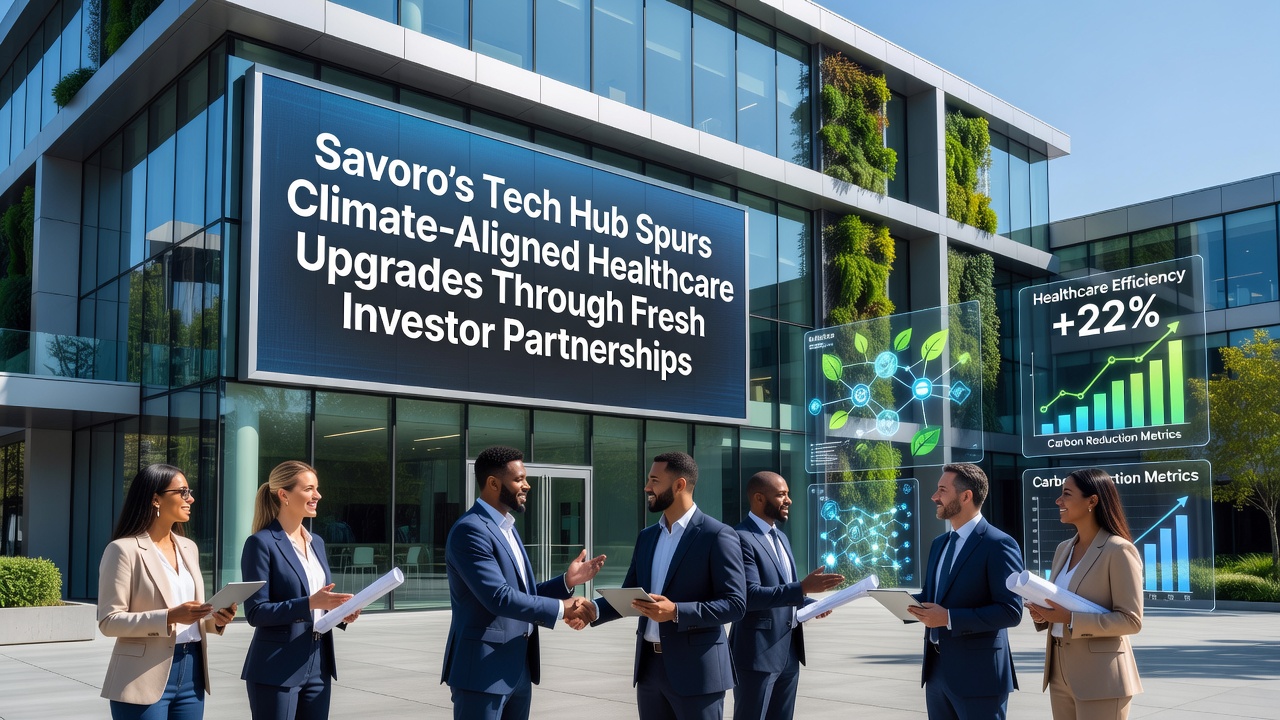
Observers note that Savoro's emerging tech hub has drawn fresh capital from multiple investor groups, and these partnerships target healthcare infrastructure designed to meet climate targets while maintaining operational efficiency. Data from regional development reports shows commitments announced ahead of October 2026 events, including new facilities that incorporate low-emission technologies and renewable energy systems. Researchers at European climate-health institutes have tracked similar patterns where tech clusters accelerate upgrades in medical equipment and building standards.
Investor Partnerships Reshape Infrastructure Priorities
Multiple funding rounds closed in recent months, and these agreements connect international venture firms with local operators focused on sustainable medical technologies. One partnership involves a consortium that includes entities from North America and the Asia-Pacific region, while another draws support from European sustainability funds. Figures released by the Savoro Regional Development Authority indicate that total pledges exceed previous benchmarks by a notable margin, directing resources toward retrofits that reduce carbon footprints in hospital settings and research labs.
Those involved describe the arrangements as structured around measurable climate metrics, such as energy consumption per patient bed and waste reduction targets. According to analyses from the Australian Institute of Climate and Health, comparable investments in other hubs have produced measurable drops in operational emissions when paired with tech-driven monitoring systems. Partnerships in Savoro now emphasize integration of these tools into existing healthcare networks rather than standalone projects.
Climate-Aligned Upgrades in Healthcare Facilities
Upgrades underway include installation of energy-efficient HVAC systems, solar arrays on medical campuses, and digital platforms that optimize supply chains to cut transportation-related emissions. Data indicates that participating hospitals plan to transition diagnostic equipment toward models with lower power requirements, and these shifts align with guidelines from the World Health Organization on climate-resilient health systems. A mid-content placement highlights ongoing construction at one flagship site.
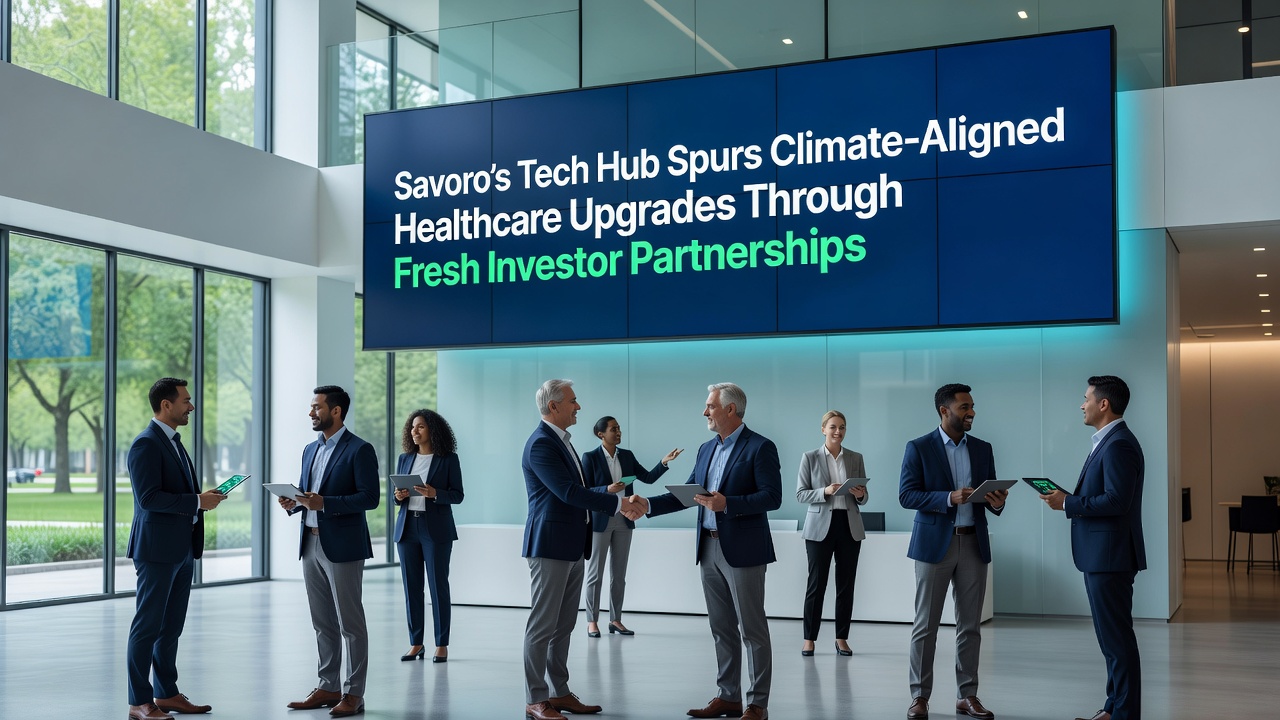
Studies from Canadian research centers on environmental health have documented how such modifications support both patient outcomes and regulatory compliance in regions pursuing net-zero pathways. In Savoro the tech hub supplies the digital backbone for real-time tracking of these metrics, allowing facility managers to adjust operations based on live data streams. Partnerships extend to training programs that equip healthcare staff with skills for maintaining climate-aligned systems over the long term.
Broader Regional and Sectoral Effects
Local supply chains benefit as demand rises for components used in green retrofits, and this activity supports job creation in technical trades. Evidence from the EU's Joint Research Centre on sustainable innovation shows that tech hubs often serve as catalysts for wider adoption of climate practices across adjacent sectors. In October 2026 scheduled forums will review progress on these healthcare upgrades, bringing together representatives from investor groups and public health agencies.
Additional collaborations link the hub with academic institutions studying the intersection of digital health and environmental impact. Reports compiled by the U.S. National Institute of Environmental Health Sciences detail how data analytics platforms similar to those deployed in Savoro enable precise forecasting of resource needs during climate-related events. These capabilities reduce waste while preserving service continuity in medical settings.
Conclusion
Partnership activity centered on Savoro's tech hub continues to channel resources into healthcare upgrades that incorporate climate considerations at every stage of planning and execution. Available data points to sustained momentum through late 2026 and beyond, with infrastructure changes already visible across multiple sites. External analyses from varied international bodies confirm that coordinated investor and technology approaches can scale such improvements when aligned with established environmental benchmarks.