Olivia Simon · 28 October 2026
Digital Funding Accelerates Classroom Technology While Enhancing Climate Tracking in Protected Historic Districts
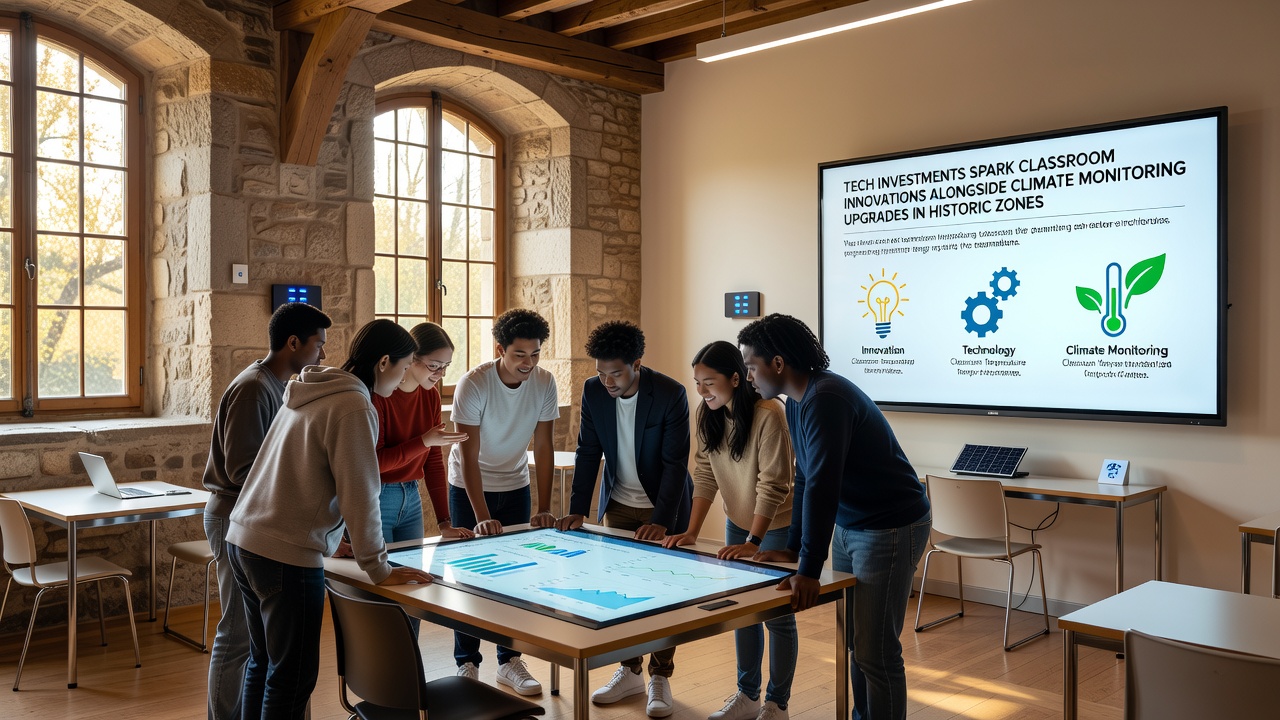
Tech investments have directed substantial resources toward classroom innovations and climate monitoring upgrades in historic zones, with multiple projects advancing simultaneously across several continents. Funding from private firms and public agencies has supported the deployment of interactive learning platforms in schools located near cultural landmarks while installing sensor networks that track environmental changes around those same sites. Data from recent deployments shows improved student engagement metrics alongside more precise readings of temperature fluctuations, humidity levels, and air quality in protected areas.
Funding Patterns and Project Rollouts
Capital flows into education technology have coincided with allocations for heritage preservation technology, creating overlapping initiatives that benefit both sectors. In regions with dense concentrations of historic buildings, investors have backed systems that combine digital whiteboards, adaptive learning software, and remote collaboration tools for students. These same investments have funded weather stations and IoT devices positioned at site perimeters to gather continuous data on microclimate shifts. Reports from the European Environment Agency indicate that such combined approaches have expanded in 2025, with additional phases scheduled to activate in October 2026.
One notable example involves a consortium that equipped secondary schools adjacent to medieval city centers with tablet-based curricula focused on local history. The same consortium installed vibration and moisture sensors on nearby stone structures to detect early signs of climate-related stress. Figures released by the agency show a 27 percent increase in real-time environmental data points collected at these locations compared with the previous year.
Integration of Educational Tools and Monitoring Systems
Classroom innovations have incorporated datasets generated by climate monitors, allowing students to analyze live information about their surrounding heritage environments. Teachers have integrated modules where learners examine sensor readings on temperature trends and connect them to lessons on material conservation. This linkage has produced measurable outcomes, including higher test scores in science subjects according to district evaluations conducted in multiple European cities.
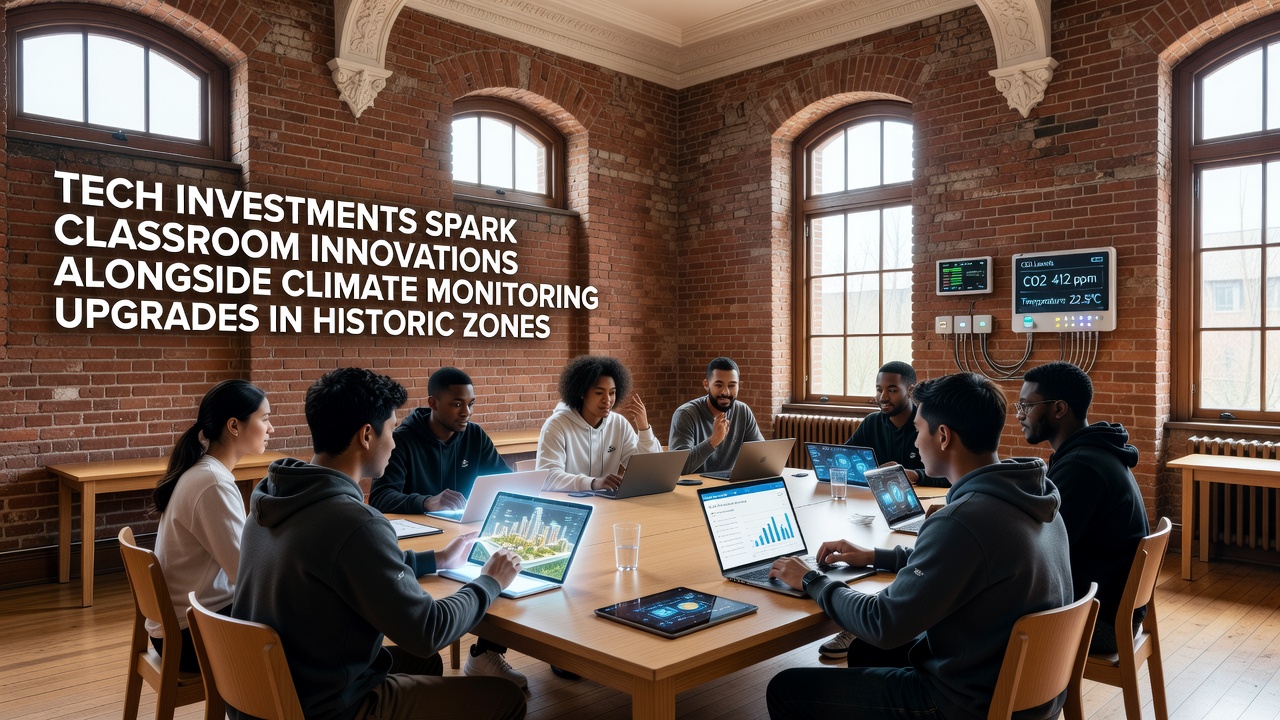
Researchers at institutions in North America have documented parallel developments. A study coordinated by the National Research Council of Canada tracked how augmented reality applications in classrooms near historic waterfronts draw from the same data streams used by conservation teams. Students manipulate 3D models of buildings while overlaying projected climate impacts, and the underlying sensor infrastructure supplies the raw numbers. The approach reduces duplication of hardware costs and creates shared maintenance protocols between schools and heritage authorities.
Geographic Expansion and Data Sharing
Expansion has occurred beyond initial pilot sites. Australian government grants have supported installations in heritage-listed urban districts where classroom networks connect directly to national climate databases. Students access anonymized readings through secure portals, and local councils receive alerts when thresholds for humidity or particulate matter are approached. Coordination between the Department of Climate Change, Energy, the Environment and Water and state education departments has streamlined permitting processes for equipment placement.
Cross-border data exchange has grown as well. Protocols developed under UNESCO guidelines allow participating sites to contribute to a centralized repository while maintaining local control over sensitive structural information. This framework has facilitated comparisons between Mediterranean and Nordic heritage zones, revealing patterns in how temperature variability affects different stone types.
Technical Specifications and Maintenance Requirements
Equipment deployed under these programs includes multi-parameter sensors capable of logging data at five-minute intervals. Power comes from solar panels paired with battery backups to ensure continuous operation during grid outages. Software dashboards present information in formats accessible to both educators and conservation specialists, with customizable alerts routed to designated personnel. Maintenance schedules call for quarterly calibration checks and annual firmware updates, tasks often performed by joint teams drawn from technology vendors and site management staff.
Training programs have accompanied hardware rollouts. Workshops organized through partnerships with technical colleges teach school staff how to interpret environmental datasets and integrate findings into lesson plans. Conservation workers receive instruction on troubleshooting network connectivity issues that could interrupt data transmission from remote sensors.
Conclusion
Combined investments in classroom technology and climate monitoring have produced interconnected systems that serve educational and preservation goals in historic zones. Ongoing deployments scheduled through October 2026 continue to refine these integrations, with data collection and sharing mechanisms supporting broader analysis of environmental conditions at cultural sites. Continued coordination among funding entities, educational institutions, and heritage organizations sustains the infrastructure required for these parallel advancements.